
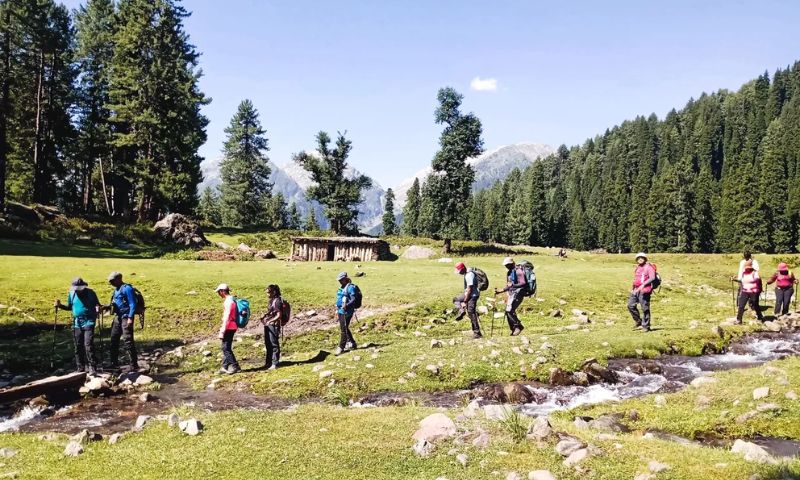
In a world that’s changing rapidly — where knowledge alone is not enough — students need more than just textbooks and lectures. They need experiences. That’s where experiential learning tours come in. These tours, whether to historical sites, industries, museums, nature centers, or even community-based projects, transform passive learning into active, immersive education. By combining theory with real-world exposure, experiential learning tours help students build the skills they’ll need beyond the classroom.
What Is Experiential Learning – And Why Tours Are Special
Experiential learning refers to learning through direct experience: engaging, doing, observing, reflecting, and applying. Rather than memorizing facts, students actively participate in learning — through experiments, projects, field visits, role-plays, community service, or real-world problem-solving.
When these experiences take the form of tours — visits to real places outside class — the benefits can multiply. Tours can provide context, scale, diversity, and exposure: students see how textbook knowledge maps onto real physical spaces, social realities, industrial processes or natural environments. This vivid, realistic immersion helps anchor abstract ideas in tangible reality.
Some effective methods under experiential learning include: field trips and outdoor learning, project-based work inspired by real settings, internships/apprenticeships, role-plays or simulations of real situations, community service, and more.
Key Real-World Skills Enhanced by Experiential Learning Tours
Here are some of the most important skills that tours and real-world experiences help students develop — and why they matter:
Critical Thinking & Problem-Solving
- Tours often present unpredictable, complex situations that require students to observe, question, analyze — and react. For example, during an industry visit, students might see how raw materials are processed, or what challenges workers face; this prompts them to think beyond theory.
- Experiential learning consistently fosters critical thinking and creative problem-solving, helping students learn how to apply their knowledge in real contexts.
Deeper Understanding & Better Knowledge Retention
- Abstract concepts become concrete when students can see or do them — whether it’s geology, ecology, history, social studies, or science experiments. This bridges the gap between knowing and understanding.
- Because learning becomes personal and experiential, students are more likely to remember and use what they learned.
Communication, Collaboration & Interpersonal Skills
- Tours often happen in groups. Whether students are working together on a project, discussing observations, or helping each other during visits — they learn teamwork, negotiation, empathy, and communication.
- These social-emotional competencies — like empathy, collaboration, social awareness — are increasingly important in the modern workplace.
Confidence, Motivation & Self-Awareness
- Getting out of the classroom and engaging in real-world environments gives students a sense of ownership. Reflecting on experiences helps them understand their strengths and growth areas.
- Many students — especially those who struggle in traditional classrooms — respond positively to experiential learning. The hands-on approach can boost engagement, motivation, and confidence.
Life Skills & Career Readiness
- Experiential learning tours help students connect academics with real-life situations. This can make them more prepared for future careers, internships, and real-world challenges.
- It also cultivates adaptability — being able to learn from the environment, navigate unfamiliar situations, make decisions under variable circumstances. That kind of flexibility matters in today’s dynamic job market.
Why Tours – Not Just Classroom Experiments – Make a Difference
While hands-on classroom experiments and project-based learning are valuable, tours add a different dimension:
- Authentic context: In a factory, heritage site, farm, or community setting — students see the real world up close: scale, constraints, interactions, environment.
- Sensory and emotional engagement: Smells, sounds, people, ambient context — such immersive sensory experience makes learning memorable.
- Cultural and social exposure: Tours often expose students to different socio-economic, historical, or cultural realities — fostering empathy, awareness, social responsibility.
- Interdisciplinary connections: Real-world environments rarely map neatly to a single school subject. A heritage site visit might spark history, art, sociology, environmental science — encouraging holistic thinking.
These aspects make tours uniquely suited to build a broad set of skills and perspectives that textbooks alone can’t provide.
Examples: How Schools & Institutions Use Experiential Tours
- A visit to a construction site or architecture firm helps engineering or architecture students link theory of materials, design principles, and site realities — improving their comprehension and employability.
- Outdoor or nature-based excursions (like farms, ecological reserves, museums) engage students studying biology, environmental science, history or social studies — giving them real-world context and practical understanding.
- Community service tours (e.g. volunteering, working with NGOs, urban-rural exchanges) help students develop empathy, social awareness, civic sense, and communication skills.
Many schools and educational institutions worldwide now integrate such tours into their curriculum to complement classroom instruction and prepare students for real-life challenges.
How Educators & Institutions Can Design Effective Experiential Tours
To get the maximum benefit from experiential learning tours, educators should:
- Plan with Purpose: Choose tours that align with learning objectives — not just random outings. Authentic relevance helps cement learning.
- Encourage Reflection: After the tour, encourage students to discuss: what they saw, what surprised them, what they learned, how it connects to their studies or lives. Reflection helps transform experience into meaningful knowledge.
- Promote Collaboration: Use group projects, shared tasks, or peer observations during tours — working together helps build interpersonal skills.
- Connect to Curriculum: Tie tour experiences back to academic material — this helps students see the relevance and integrate theory with practice.
Conclusion
In an ever-evolving world — where adaptability, collaboration, creativity and real-world problem-solving matter more than ever — relying solely on textbook-based education is no longer enough. Experiential learning tours bridge the gap between theory and reality. They offer students not just knowledge, but skills – critical thinking, confidence, empathy, communication — that will serve them long after the exams are over.
By embracing experiential learning tours, educators prepare students not just to pass tests, but to navigate life, career, and society with competence and awareness. If you’re an educator, parent or student — consider stepping beyond the four walls of the classroom. The world is a better classroom.