
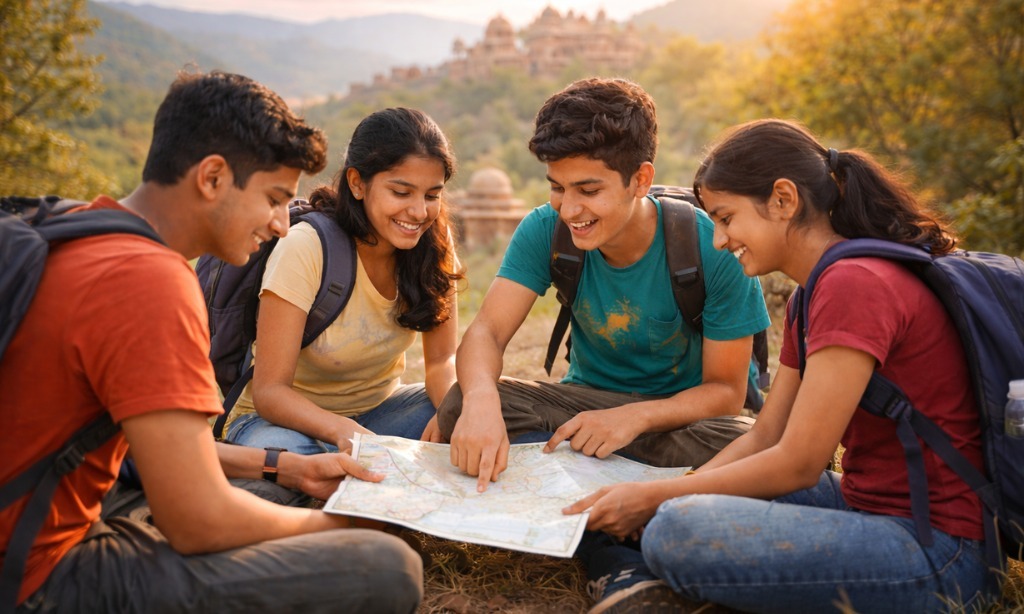
Learning today goes far beyond classrooms and textbooks. The skills students gain through educational travel help them develop confidence, practical understanding, and a deeper connection with the world around them.
Educational tours allow students to step out of their comfort zones and experience learning in a real-world environment. These experiences shape students into confident, capable, and well-rounded individuals.
1. Real-World Learning Beyond Classrooms
Travel allows students to experience concepts they usually study in books. Visiting historical monuments brings history to life, exploring landscapes improves geographical understanding, and interacting with communities strengthens social awareness.
This form of experiential learning improves retention because students learn by seeing, doing, and experiencing rather than memorizing.
2. Improved Communication Skills
When students travel, they interact with people from different cultures, regions, and backgrounds. This naturally improves:
• Verbal communication
• Listening skills
• Confidence in expressing ideas
Whether asking for directions, interacting with locals, or participating in group activities, travel helps students communicate clearly and confidently—an essential life skill.
3. Cultural Awareness and Emotional Intelligence
One of the biggest advantages of educational travel is cultural exposure. Students learn to respect different traditions, lifestyles, and perspectives. This builds:
• Empathy
• Open-mindedness
• Emotional intelligence
Such exposure helps students grow into responsible and aware individuals.
4. Problem-Solving and Decision-Making Skills
Travel presents real-life challenges—adjusting to new environments, managing time, and handling unexpected situations. These experiences help students:
• Think critically
• Make quick decisions
• Adapt to change
These are some of the most valuable skills students gain through educational travel, useful in both academic and professional life.
5. Problem-Solving and Decision-Making Skills
Stepping away from routine encourages independence. With the right guidance, travel helps students:
• Take responsibility
• Manage schedules
• Build confidence
This confidence often reflects in academics, communication, and personal growth.
6. Teamwork and Leadership Development
Group travel teaches collaboration and leadership. Activities like group tasks and shared responsibilities develop:
• Teamwork
• Leadership skills
• Mutual respect
These experiences prepare students for real-world teamwork environments.
7. Career Awareness and Inspiration
Educational tours expose students to industries, professions, and new ways of thinking. This helps them:
• Discover interests
• Explore career paths
• Understand practical applications of education
Travel often inspires students to think beyond traditional career choices.
Why Guided Educational Travel Matters
Well-deliberate and expert-led instructional tours ensure that students learn in a safe, established, and significant way. Guided journey transforms sightseeing into reason-driven studying reports, combining schooling, consolation, and exploration.
At Carnival Xplorer, travel experiences are designed to balance learning, cultural exposure, and enjoyment—ensuring students benefit from abilities that last a lifetime.
Conclusion
The skills students gain through educational travel go far beyond textbooks. From communication and confidence to leadership and cultural awareness, these experiences shape students into capable individuals.
As education continues to evolve, travel becomes an essential part of learning—preparing students for a more connected and dynamic world.