
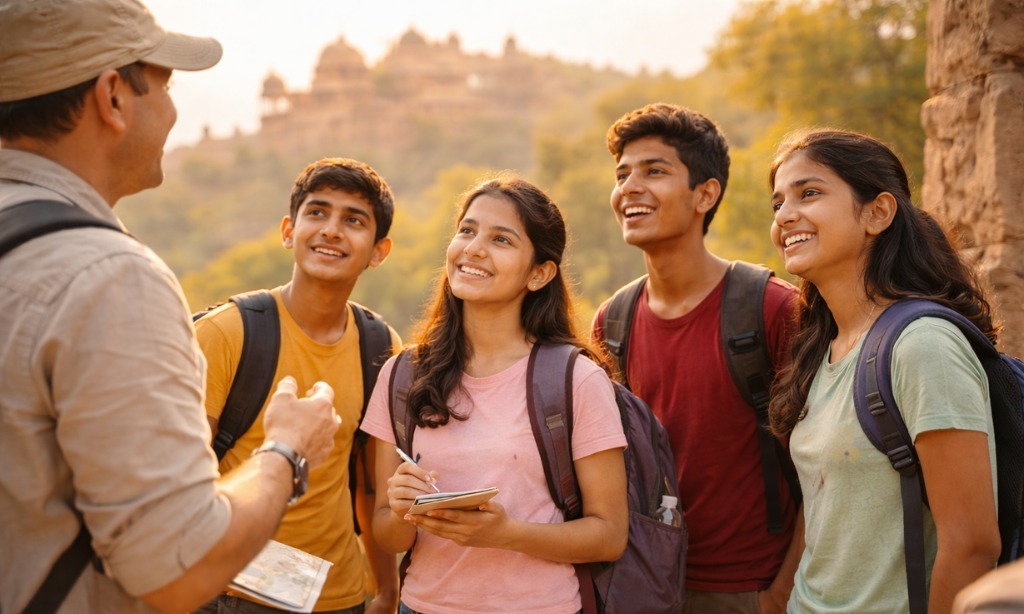
Introduction: The Limits of Classroom-Only Learning
Understanding the importance of educational travel for students helps bridge the gap between classroom learning and real-world experiences.
Traditional classroom learning plays an important role in building academic foundations, but it often limits students to theoretical knowledge. Subjects like history, geography, culture, and social science are usually taught through textbooks, which can make learning feel abstract and disconnected from real life.
As education evolves, there is a growing need for experiential learning—learning that allows students to see, feel, and experience concepts rather than just read about them. This is where educational travel becomes a powerful tool for overall student development.
1. Skill and Learning Outcomes Students Gain
Educational travel helps students develop skills that go beyond academics. Some of the most important learning outcomes include:
• Critical thinking and observation skills – Students learn to analyze real-world situations instead of memorizing information.
• Communication and social skills – Interacting with peers, guides, and locals improves confidence and expression.
• Independence and decision-making – Travel encourages students to take responsibility, manage time, and adapt to new environments.
• Emotional intelligence and empathy – Exposure to different lifestyles and cultures builds sensitivity and respect.
These skills highlight the importance of educational travel for students in shaping confident and capable individuals prepared for real-life challenges.
2. Real Travel Experiences That Enhance Learning
Travel brings learning to life through direct experiences. When students visit heritage sites, cultural landmarks, and local communities, education becomes meaningful and memorable.
For example:
• Visiting historical monuments helps students understand history beyond dates and events.
• Exploring different regions teaches geography through landscapes, climate, and ecosystems.
• Experiencing regional food and traditions introduces students to cultural diversity.
• Interacting with local people helps students understand social structures and everyday life.
Such experiences make learning more engaging and improve long-term retention, reinforcing the importance of educational travel for students in modern education.
How Guided Tours Improve Learning Outcomes
While travel itself is beneficial, guided educational tours significantly enhance the learning experience. Expert guides provide context, explanations, and structured activities that help students connect travel experiences with academic concepts.
Guided tours ensure:
• Clear learning objectives for each destination
• Age-appropriate explanations and discussions
• Balanced schedules that combine learning and enjoyment
• Opportunities for reflection and group interaction
At Carnival Xplorer, educational travel programs are designed to align learning with exploration, ensuring students gain knowledge in a structured and engaging way.
Safety and Structure: A Key Concern for Educational Travel
Safety and organization are essential when planning educational trips for students. Well-planned educational travel provides:
• Supervised itineraries
• Pre-planned accommodations and transport
• Experienced coordinators and guides
• Clear schedules and responsibilities
A structured approach ensures students can focus on learning while parents and institutions feel confident about safety and discipline.
Conclusion
The importance of educational travel for students lies in its ability to combine academic learning with real-world experiences. It builds essential life skills, enhances cultural understanding, and helps students develop confidence and independence.
When supported by guided planning and safety measures, travel becomes more than a trip—it becomes a powerful educational journey that prepares students for a broader, more connected world.